Wednesday, September 18, 2019

The Aesthetics of the Early Internet

After reading about the WELL, I realized I had very little idea of what the early days of the internet were like. I mean, sure, I vaguely remember my parents using late-era dial-up, but by the time I was allowed on the computer (as kids, my brother and I weren't allowed to watch TV or use the computer until I was 10 and he was 8), Gmail was up and running and I used the chat feature on it to talk to my friends from school - not that I would have been allowed on message boards anyway.

I'd heard about ARPANet through readings for this class and others and knew that it was a Sputnik-era version of the Internet, but I didn't know much about how people actually connected to the Internet between its ARPANet military days and what vague concept I have of dial-up. This earlyish-Internet-esque webpage from Elon University helped me out, telling me that in 1969, ARPANet connected 4 American universities in the first computer network. From there, other colleges continued to be added, and then in '72 the ARPANet went public and the first email was sent, but even by the late '70s it wasn't really used by anyone outside of the research community. After this came what I read about the WELL, and Sir Tim Berners-Lee.

All this still didn't tell me how people physically got connected to the web. I wanted to know about the cables and wires and clunky monitors and how that all fit in, since I'd only ever heard of it from my parents and seen little bits and pieces in movies. This article on the history of the internet in the 80s was a little more helpful, showing pictures of the first (extremely clunky) portable computer.
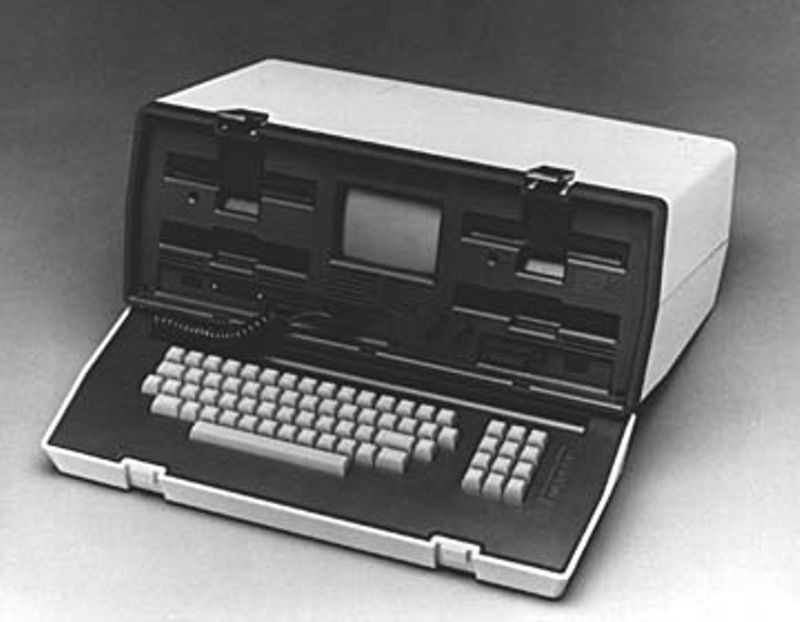
An absolute unit

However, this video was much more helpful at actually explaining and showing the different physical components of an earlier computer (in the first 5 minutes, he gives an introduction before he starts connecting). Of course, this is a modernized version since the video was made in 2014, but it gave me a pretty good idea. 


The amount of waiting involved didn't surprise me, but I did wonder if I would be able to do it now that I'm used to the internet speeds we have now - everything is near-instant. However, I think that if I was new to it when it was first around, the novelty would outweigh the waiting and I'd also have nothing faster to compare it to. Do you think you'd be able to be patient with the "ancient internet"?

Thursday, September 12, 2019

Are the 20-somethings soft, or do Boomers need therapy?


Are the 20-somethings soft, or do Boomers need therapy?

Peggy Claus's The New York Times article, Thank You for Sharing. But Why at the Office? both exposed me and confused me. I am guilty of some of the dialogue mentioned in the article but completely stunned by others.
I desperately want to know the 20-something-year-olds who were behind this, "A human resources manager for a manufacturing company told me that several young workers had asked her how many times they could be absent before she fired them." Reading this statement initially made me feel stupid for being in the same demographic as the people who talked to their boss like that. The way the question was asked made it that much more problematic. They may as well have said, "So what's the least amount of time I can be here? How much can I get away with?"
I have a hard time believing that a person in their 20's referred to calling out of work, or otherwise not showing up to work, as being "absent." Then I thought to myself, there's no way this can be real. Is all this information correct- are we sure these aren't teenagers at their first jobs? I know how older generations like to lump the younger generations together- I remain skeptical.
At the start of the article, Claus reported on young people lacking a level of professionalism, as seen in how they speak to their managers. Then, she added cloudy examples of us being overly emotional and that we love to tell everybody everything.
Claus wrote, "The workplace has become our second home, the place where we spend a majority of our waking hours, so we want to make it as comfortable as possible, which often leads to a lot of sharing." I want to know what you all think of this- Why is this a bad thing? Why shouldn't your place of work be your second home?
The younger generations make great friends with their coworkers, and sometimes managers (Claus seems to draw the line there), and work becomes a community; there's a socialness to it. If my coworker is having a bad day, I know it immediately. Why can't we talk about it while we work? Does the younger generations sociability and capacity for empathy offend Baby Boomers?


I like to think that Millennials and Gen Z are a lot kinder to each other than Baby Boomers were (and still are). Regardless of political standing, Boomers are known for being in bad moods all the time. Rejecting emotions, and how they affect the mind and body seems to be a Boomer mindset, and for that I'm glad. I'm not saying all us younger folk are experts at handling our emotions by any means, but we are way more likely to talk about our feelings than that generation. How is this a negative? We, the younger, oversensitive, dramatic, and dumb ones, understand how to listen to each other and how to be vulnerable about how we feel in order to feel better.
All in all, Boomers grew up in an era of affluence, success, and The Beatles, and are still unhappy. If anyone needs to have a therapy session in the workplace, it's them.

Wednesday, September 11, 2019

Something that has been repeated throughout of classes is that as much as things change nothing is new. Chapter 2 of Nancy K. Baym’s book, Personal Connections In the Digital Age, compare the words of Plato who thought writing things down would cause forgetfulness and Nick Carr who thought that the instant gratification of technology is deteriorating our attention span. As technology progresses, it is in our nature, and especially our major to compare things to how they used to be. 
My comment on the blog “Avoiding Technology: Is it possible” I began to think about how I used technology as a kid, how I use it now, and how kids use it now. I wrote that, “Back then, in fourth grade, technological life had not encapsulated my life like it has now. In those days the highest piece of technologies we cared about were our NintenDogs, portable DVD players and the fancy new Smart Boards that all the teachers raved about, but none of them seemed to know how to work. Technology was not in our back pocket yet”. This thought that technology has changed so much since fourth grade made me begin to think about the advancements with multiple perspectives
First I thought about it with a technological determinism perspective. We still played outside as kids all the time when we went to dinner we either behaved or we were dragged out on time out. We always had to ask how to use the school office phone and were so excited when our grandparents rented video cameras. These days children have Ipads that distract them into behavior at dinner tables, they all know exactly how to use technology sometimes even more than we go and they must just be staring at screens all day right? Are the machines changing them? Will those darn kids these days grow up without learning good behavior or social skills that they need? My thinking on that after reading is kinda, sorta. We had TV and the generations before that had radio. There are always changes in technology and they will always be open for critique. I remember doing homework on different things on the news and other educational Television shows as well as having computer classes in elementary school. Folks from older generations may have thought these things were going to melt our brains in the same way I started critiquing the fourth graders these days with their Fortnight and Kindles. There is yet one example of things changing, but not so much.
Next I tried to think of myself and children these days in relation to technology with a Social Construction perspective. This means that society changes technology. I was thinking about the Razor Phones and Ipods coming out and how our “attractive peers” as Baym calls them, all had them and made us all want them. Then came phones with Ipods right on them and we all had to have them. I thought this is a classic case of supply and demand. As people want certain things, and think certain things are cool and impressive, they are improved and created more. From a child's standpoint, if I tell the child I am babysitting that something is the dumbest thing ever, they are going to refuse to try it and tell their friends it's the dumbest thing ever. But when fortnight came out, they said it was the coolest thing ever and the company continued to improve and the kids were more and more addicted to it. It goes on like this.

Overall Technology really can only be viewed with a “social Shaping Perspective. This is a middle ground for the two. Technology becomes part of our lives and it grows with society. As much and as fast as things change, it's all comparable. As Dr Mary Elizabeth Ray said in class, “These critiques are as old as the alphabet”.

Benefits of a Digital Detox


            After watching We Live in Public this week’s class and looking at ways to detach yourself from social media and your phone, I thought it would be a good idea to look at the benefits of doing a small social media detox. There are a lot of different reasons to want to take a break from social media even though it may be hard. A social media detox can last up to how long you would want to make it. Anything to disconnect for a little while and live in the now.  
            While doing a little bit of research I came across a Life Hack article called 9 PositiveBenefits of a Social Media Detox. I thought that this was interesting and hit a lot of different reasons as to why we should detox from social media.

Holly Chavez stated:

“In fact, the average person spends at least 1 hour and 40 minutes per day looking at their favorite social media sites and apps. This is an outstanding amount of time that could be spent in other ways, but it is also indicative of the current social media and business culture.”

I thought this was fascinating because the thought of going into a business environment and have to be on social media can also be negative or draining for someone, even if it is your job. In the article, it stated that it can protect your privacy. I agree, but there is already so much on our social media that privacy is hard to come by. The reason the article gave was that you would delete your phone number that is installed with Facebook or other social media, and that’s what would make you have more privacy. Even though you probably will go back to the app. This isn’t what I was necessarily thinking about when it said it would protect your privacy. I thought it of being more of people wouldn’t know where you are all the time or what you are doing.

There are a lot of aspects in this article that resonate with me in. One of them is that your overall mood will become better. Social media can make you feel bad whether it is about body image or worrying about who is looking at what on your social media. One of the biggest points in this article is to live in the moment, which is what I am trying to do. I think that I could potentially live in the moment when I’m not on a “detox”, but it would be incredibly hard. Living in the moment is so important because if you are on your phone you are passing up all this time you have to be with people and explore without worrying about posting all the time.

This article made me think about seriously having a social media detox, I know I would it would be hard and I would need to adjust, but I think it would have a positive impact on me. 

I Am A Goldfish

Reading Nick Carr's excerpt about Google from the Atlantic in the third chapter of Baym's Personal Connections in the Digital Age made me think about my own perception of my intelligence and attention span. Carr says that Google made him stupid by "remapping my neural circuitry...I'm not thinking the way I used to think" (Baym 27). He then goes on to say that he notices this lack of memory and concentration while he's reading, contrasting his previous experiences of being able to "get lost," so to speak, in the text, with his current experience of having his mind wander after a few pages.


This kicked my tiny goldfish brain into gear, probably because I now think of my brain as a goldfish brain. His experience (and mine) aren't occurring in a vacuum, either; a study published in TIME Magazine in 2015 from the Microsoft Corporation confirms people's concerns about shrinking attention spans, claiming that concentration is lost after an average of 8 seconds. It also says that people who use multiple media at once are more likely to get distracted and are less able to focus on one thing at once. However, it also claims that the "bright" side is that "our ability to multitask has drastically improved in the mobile age." There are multiple articles from other sources that are based on the Microsoft study (New York Times, USA Today - which focuses on these shorter attention spans in the context of sports media - and the Guardian, which focuses on the issue in the context of politics). However, more recent articles, like this 2017 article from the BBC, say that attention is task-based and that there isn't really an "average" attention span.

I think news like this freaks most people out, myself included, and adds to the panic that technology is making us stupid. Every time I get distracted by my phone while I'm trying to do coursework, I get this sense of almost impending doom, of "oh well, I guess I'll never be able to do any efficient work tonight or ever!" But it's important for me and other technolo-doom sufferers to remember that this is more of an adaptation to the conditions under which we have to work than a complete loss of focus.

Monday, September 9, 2019

Avoiding Technology: Is it possible?

"From a media choice perspective, change happens at an individual rather than a societal level. By extension, this means people are able to avoid technological influence by avoiding technology" (Baym, 29-32). After reading this in chapter 2 of Personal Connections in the Digital Age by Nancy Baym, it got me thinking: is it really possible to completely avoid technology in America's technology and media driven world? At first, I quickly dismissed the question upon thinking about the Amish population and their ability to keep away from technology. However, as I continued reading, my mind wandered to if the Amish fully refrain from the use of modern technology as a large population of America is heavily influenced with technology use.

After a quick Google search, I learned that in Lancaster, Pennsylvania, an Amish man checks his voicemail, has light operated turn signals on the carriage of his horse and buggy, and uses a power drill to increase the speed of production in his business. A NPR article and podcast, Amish Community Not Anti-technology, Just More Thoughtful by Jeff Brady highlighted that, yes, the Amish do not believe the American rhetoric that new technology is better. However, some Amish affiliations recognize the benefits of some modern technology, but they are more thoughtful with their use of it.

Across the American Amish population, there are 40 different affiliations, but they all have different ideas about the use of technology: some are open to the idea of new technologies being used mindfully, such as, to increase production in businesses, while others continue their conservative ways without modern technology. Ben, who only wants to be referred to as his first name out of respect for Amish beliefs, says "...new technologies take...place between the push of progress and the pull of tradition".

A video produced by NBC Left Field highlights an Amish and Mennonite community, Pinecraft, Florida, where the rules regarding technology are much more relaxed than in other Amish and Mennonite communities around the country. Visitors and those who reside there full time ride bikes to get from and to place, use iPads in businesses, and one woman even started a podcast with her friends to "reach that word of God as far and wide as [she] can". So, even here, in a community where the rules of modern technology aren't as rigid for the Amish members, their use of  technology is intentional and purposeful.


So, this stream of consciousness brings me back to my initial question of an everyday American's ability to avoid technology. In a short, personal answer, the answer to this question is no. I believe that even with hard work and very intentional strategy, not using technology would eliminate so much from use that the average American engages with at least once a day, especially as a college student. For me, if I decided to not use modern technology (i.e. smartphone, laptop, etc.), I wouldn't even be able to be enrolled in this class since we are required to use the internet to post blogs, live tweet documentaries, and just have general conversations about technology in today's world.

However, I am drawing this conclusion based on personal experience and knowing myself and my daily life. Some people may be able to go about their days with no technology use very simply. I also recognize the benefits to reducing technology use. From an article by Lauren Van Sickle, a marketing intern at Griffith College in Ireland, benefits of "switching technology off" are things such as better sleeping habits, a decrease in anxiety and an increase of happiness, and more time for "living in the moment". 

This article has made me consider trying to reduce my technology use, or at least be more mindful of the use. What do you think about this topic? Could you reduce your technology use, or eliminate it completely? Do you think certain demographics would have different challenges reducing their technology use, such as college students in America? 

Friday, September 6, 2019

Am I Here? A Look at Long-Distance Friendships

Is the concept of "Internet friends" still so alien to us? Is it "unnatural" to have a friend you've never met in person before?

In November of 2018, I joined a Discord server (I may do a post on Discord as a platform in and of itself later, because I think it's so interesting that it has such a diverse user base). I learned about the server through Tumblr, because it has been my default blogging platform for a long time and that's where I feel most comfortable, both with the interface (the reblogging function and the ability to customize your blog in HTML are both great for filtering content you want to share) and the community. This particular Discord server was born out of a love for the band Queen, which in a vacuum would seem like old news but, within the context of the Bohemian Rhapsody movie being released, can be described as "re-relevant."

When I first joined the server, the usually flurry of activity and excitement that comes with joining a new group, whether that group is physical or virtual, was at the forefront of all our minds. We introduced ourselves and consumed each other's introductions, joked and shared memes, all in the context of Queen. As we got to know each other better, we voice-chatted and video-chatted several times -- once, we watched a movie together, which caused much hilarity because the lag from the video made it impossible to sing the songs from the soundtrack in sync. We shared stories that we'd created and personal experiences we'd had on a particular day. I ended up editing a short story written by one friend, and another friend shared many alternate-universe stories (I think she presently has at least 4 AUs).

In Chapter 1 of Nancy Baym's Personal Connections in the Digital Age, Baym references Kenneth Gergen's description of contemporary communication as "a 'floating world" in which we engage primarily with non-present partners despite the presence of flesh-and-blood people in our physical location" (in Baym p. 3). We do tend to have our phones out and be talking to people who aren't physically present and, according to the Pew Research study we read, sometimes we even ignore the fact we think it's rude and do it anyway. However, I think the "floating world" statement makes it seem like we don't have "real" connections to the friends we make online, and I'd like to argue that we can make those connections. In fact, I think video/audio interaction, in addition to the text/chatting interaction that commonly comes to mind when people think of online communication, makes the friendship as strong and viable as face-to-face/in-person friendships. I also think that the audio and video components make it easier to trust the person on the "other end;" we've been trained to be suspicious of anyone and everyone behind a username, and for good reason, but I think that with caution, new long-distance friendships are possible.

Because of the connections I made with my friends from the Discord server, I was able to be comfortable enough to meet two of my friends this summer. Interestingly, we were able, in a sense, to "pick up where we left off" instead of having the persistent awkwardness of making someone's acquaintance for the first time.

Has anyone else had an experience where they formed an online friendship through different media? Has the use of different media (audio, video, etc.) made your friendship stronger? Do you think we're just trying to replicate the face-to-face experience with these tools?

Here's a short video explaining the ins and outs of Discord:

Monday, September 2, 2019

Welcome to CM3945 - Fall 2019


Welcome all the Social Media: Technology and Culture Fall 2019 Semester! 

During our first week we explored day to day digital connectivity and read danah boyd's Participating in the Always-On Lifestyle. In class, we interrogated the tension of always being connected to our social networks - our smart phones are always with us, and most often always on. 

We are at an important historical cultural point. A point where we've observed humanity no longer go "on the internet" but now instead live online. This brought our conversation to the idea of disconnecting. Of unplugging. Would we take a digital sabbatical? Might we live unbeholden to the many alerts on our phones and digital devices? 

Given our conversations and reflections, I found this Forbes article, Unplugged: 14 Best Places To Get Off The Grid, particularly relevant. 

An excerpt: 

"In the past year alone, web searches for “digital detox” have increased by 42%, while a survey found that one in five consumers is taking a digital detox.
And it's no wonder travelers are craving an off-the-grid escape, given that we live in an increasingly high-wired, hyper-connected world. A whopping 96% of Americans own a cell phone, and the average user touches their phone 2,617 times a day. People are looking for ways to separate from their electronics, especially on vacation."
The piece goes on to share a number of digital detox getaways. I remember our class was a bit divided when it came to unplugging. So I ask you now... are you up for a digital detox? Perhaps the "Power Off in Paradise Package" or even the "Camp Grounded"? Why or why not? 
Regardless of your answer, what are your thoughts on digital detox tourism? Is it a fleeting trend or will it be around in 10 years in some form or another? 
Tell us your thoughts in the comments... 


Sunday, December 9, 2018

MLM and Social Media

Multi-Level Marketing. What is it? I'm sure you have heard some bad rep from some people who have terrible experiences, and those are real and valid, but when you find a company that has a calling, a mission and actually cares about you as a person, that is something you can get behind.

I am a distributer for Young Living which is a MLM that has been around for over 25 years. We are best known for our essential oils, but we have all kinds of lifestyle products that have really impacted my life for the better. So I decided to do this business side of things with them.

Something that is awesome and I am in the learning process of is how to use social media to build my team. I recently (today) signed up my first person to start their wellness journey. I did this through sharing about my company and my experience on a "12 Days of Shopping" (click here to join if you would like!) Facebook group. I honestly didn't want to because of all the stress of finals and the end of the semester, but a woman from my church asked me so I thought, it can't hurt.

So what did I learn? I first started out by doing a live video in the group going over the products and the basic aspects of getting the products. This was great because I got to interact in real time with a bunch of people and I made connections! This is what it is all about in MLM, building relationships.

Then I posted a couple times a day with some information about the products that I tried and loved. The people who either commented, liked or viewed, I reached out to with a personal message and asked if there were any questions I could answer for them. These people became my prospects. I'm following up with them tomorrow!

With just a couple posts and a live video I had around 25 new prospects, 7-10 people (so far) reached back and said they were interested, I set up 3 different in person meetings, and I signed up one person without even needing to meet in person! This was just a couples hours work over the course of one week.

So how does this transfer over to other platforms? Facebook has the awesome feature of groups, so that you can't really duplicate on the other top platforms like Instagram and Twitter. But certainly the posts, live videos can all be incorporated easily on Instagram.

What I love about using social media for my business and growing team is that is it so much easier to connect with everyone. I am in a couple different groups for my business and some have 12,000 people in them. Talk about a wealth of information! I can have my questions answered at any time of the day! I can grab graphics that are ready made for my and inspiration for my posts. I love the progress thats being made and I can't wait to see where this journey takes me.

Wednesday, December 5, 2018

Can social media isolate you from the real world?

Image result for isolation
Npr News have stated that young adults are not actually experiencing social media at all. Young adults each user contain multiple social media outlets. But why for us we require to have multiples accounts instead of only having one form of communication. Yet researches were not terrible surprise about how many individuals would experience isolation.

For myself, it's important to connect in person so people understand the message more clearly. However, with the technological shift, most companies require online application limiting the reality to see if the employer is actually suitable for the job.

In a survey made of the article adults between the ages of 19 to 32 years old use at 11 social media apps Due to the feeling of isolation. In today's world, people spend at least three hours online Younger audiences tend to feel more comfortable having more opportunities. While older adults experience more isolation due to they're older models of communication.

Sunday, December 2, 2018

relationship VS technology


           As many of you have herd before relationships have taken a hard hit with technology playing such a huge role now a days, from cat fishing, to years and years of talking online and never meeting the other person in real life. It has created new ways for unfaithful people to cheat even easier. The list goes on and on, but I found an article that talks about all the affects that technology has had on relationships from the good to the bad. Because like all topics there are good and bad things that come along with this. Because technology has been great for military families, it has made it much easier for the people who have been deployed to actually be able to see their family members, and see and talk in real time with them! As well as long distance relationships in general, because they can FaceTime and talk and see each other in real time which is great but then the down falls come along with those as well. But like the article says some of the bad out way the goods here because the internet can be a dangerous place for kids or anyone for that matter, people can act like whoever they want to be, and lead people to unsafe situations very easily. That is the part that scares me, because children are getting phones at very young ages no a days and there is really nothing that you can do to protect them from these creepy online people because they can hack away the parent locks and look at anything on their phones. What do you think? Should kids be able to get phones at such young ages? Should there be more laws in place to try and stop cyber criminals? 
               
            Also what about families and kids at the dinner table, you see this time and time again families will be sitting at the dinner table whether it be at home or out at a restaurant they will all be on their phones not talking to one another, completely buried in their phones. This makes me so sad to see because I come from a family where we didn't get phones until high school and we certainly didn't get to use them at the table, we would get yelled at if we had our elbows on the table. It is crazy how much the family cultures have changed around here, and all over the world. 

The Effect of Technology On Relationships. (n.d.). 

Caught on Camera


Some of the Ottawa Senators players have gotten into some bad media coverage the other week. The seven star players were talking bad about the assistant coach and talking about the penalty kill on how bad it has been. You might be thinking what's wrong with that? Everyone talks about other people behind their backs and if you are reading this and say "that's false, I've never talked behind someones back." You are lying. Well how the professional hockey players got caught and this information came to the surface of attention was because it was filmed by the uber driver with out them knowing. The uber driver put the video up on youtube and then sent it out.
 The articles brings up how " The incident, they said, shines a light on the growing ambiguity between public and private spaces as well as the shortcomings of current laws and social practices." So how do we really know now what's really a private space anymore?
Scott Thompson who studies surveillance technologies says "The problem is that with the advance of technology, we’re seeing that it’s more and more difficult to identify spaces in this way,” Thinking you can talk about something but little do you know it is being recored without your permission. The idea of private and public has really changed in meaning.     
  

Saturday, December 1, 2018

Different Names for the Same Thing


I don’t know about you, but I find the winter months to be rough. With daylight savings time come and gone, the reality of the season has truly set in. The sun barely shows its face for more than a few hours before we’re back into darkness before dinnertime. Some people cope with this through medication, blue lights or forcing themselves into winter sports. I’m trying to soothe away the SAD with music.

This week, the artist I’ve had on repeat is Death Cab for Cutie. I know – not exactly the epitome of cheer and sunshine, but it works for me. While browsing the reading assignments for this week’s class on copyright, I happened to have their track Different Names for the Same Thing playing in the background. As I took a break to brew some tea, I found myself humming along to that refrain. It dawned on me, in that moment, that I was singing a simplified description of the same material I was reading.

In her book, The People’s Platform, Astra Taylor spends an entire chapter talking about copyright, creation, remix culture, distribution and piracy. While making a lot of very important points, one that I found quite interesting was her explanation of the “free culture activists.” This party is against copyright laws and believe in the free sharing of all media content. Curiously, Taylor points out that the very companies who oppose this mindset also ask their audience to embody that exact same attitude. She writes that “tech companies encourage their users to imagine themselves as remixers and DJs, curators and mash-up artists…even as the same tech companies ferociously cling to their own intellectual property and jealously guard their trade secrets, snapping up patents at breakneck speed.”


Taylor goes on to make a potent observation: each side of the copyright argument, at one point or another, seems to mimic the attitudes of the other. Remixers, posed as opponents of copyright and corporate distribution companies, make their name on the curation of others’ work. They’re not makingtheir own original work, but instead benefitting from the work of others and what they choose to do with it. Can’t the same be said of content distributers like music labels and production companies? It’s not creation, but curation. Whether they’re fighting for the right to remix media content or suing for copyright infringement, they’re still trying to protect their right to benefit from someone else’s work. It’s different names for the same thing.

None of this makes it any easier to figure out the right answer to copyright issues. If anything, realizing the similarities between each side of the argument makes it appear less like a black and white issue. I do believe remixers should be allowed to remix, and I don’t think it’s a crime to want to profit from your creative work. However, should we be spending our time and resources protecting the right to remix existing work, or should we instead be encouraging new original work to be created? Is one art form more valuable than the other? Should we regulate who is allowed to profit from intellectual property, or for how long they can do so?

It’s complicated. It’s confusing. It’s not an easy issue to agree or legislate on. I’ll let you tell me what your thoughts are in the comments below. I’m going to go listen to that DCFC track again, for which only one version and exactly zero remixes exist. Sometimes I need a little simplicity.