Wednesday, October 24, 2018

Technology's Role in Today's Relationships


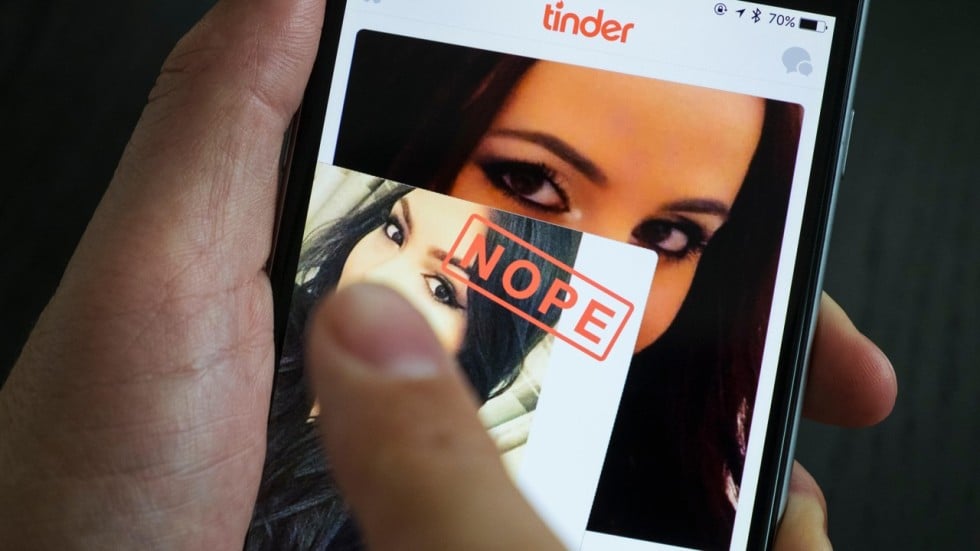
No matter how you choose to use technology and the internet, it's a tool that's being implemented in most of today's relationships. With the invention of dating apps such as Tinder and Bumble, it's now easier than ever to connect with other people online. This changes the whole playing field to how relationships can play out. Most of these changes are reflected throughout different generations. 


Technology affects all sorts of relationships; new relationships, long-term relationships, and relationships within people of all ages. Technology affects different relationships in different ways, for example, according to Amanda Lenhart and Maeve Duggan, in their article Couples, the Internet, and Social Media, they go on to explain how "long-term couples tend to view and utilize technology quite differently compared with those who have been together for a shorter period of time." This is primarily due to generational differences, but at any age, technology plays a role in today's relationships.

In terms of serious relationships, it's reported that 45% of internet users aged 18-29 say that the internet has had an impact on their relationship, but only one out of ten internet users 65 and older agree. It's reported that younger adults tend to run into more issues with technology within their relationships in dealing with trust issues or stress about what their partner is doing online. In reported marriages of internet users, only 74% felt that the internet had an impact on their marriage, and that impact was still positive. 

Image result for tinder internet dating

Monday, October 22, 2018

Is it okay to break up online?


Is it okay for someone to break-up with their girlfriend, boyfriend, wife, or husband over the internet?  I started to really ponder this question while doing this week’s reading, Fifty Ways to Leave Your Lover.  There are a few examples that the author uses to illustrates how people have broken things off over text or email and how it made certain users feel.  The example that stood out to me was the exchange between Halle and Doug.  To summarize, Doug broke up with Halle over text because he was in love with another girl, Rianna, whom they've both joked around about over text prior to their break-up.  Because of the nature of their texts, it took awhile for Halle to actually realize that Doug wasn’t kidding.  It seems as though breaking up over text can lead to confusion.


This is something I usually criticize.  I don’t like it (personally) when people break things off over text if they were in a serious relationship.  From what I’ve seen, it leads to closure issues, or people not getting why or how.  The message isn’t clear.  This leads to the idea of media ideology that the author talks about.  Media ideology is how we label certain media in terms of informal or formal.  For instance, I consider texting or using social media to communicate with friends, like Snapchat, examples of informal media.  Whereas, face-to-face communicate, video chat, or in some cases, over the phone, I would consider more formal.  Therefore, when I text my girlfriend, it's usually exchanging jokes or idle talk, per say.  But if one of us ever decided to end things, I would want in to be face-to-face, or, at the very least, over video chat, but even that would be pushing it for me. 

But how about others out there?  Which type of media do you consider to be more formal and more informal?  And is there any media formal enough that breaking up would be considered okay, or, does a person have a responsibility to end things face-to-face, assuming that they have the ability to do so?

Monday, October 15, 2018

Not All Bad

It seems as though when people are discussing social media, it is for the most part in a negative light. There are of course negatives to social media like there are to most things, but I think the recent reading, ‘The Future of Well-Being in a Tech-Saturated World’pointed out the importance of how medias have created new ways for us to express ourselves. I found the contentment aspect of benefits of digital life to explain this idea the best, “The vast majority of human ambition and objectives are far more noble: people desire to educate themselves, people desire to communicate with others, people desire to share their experience, people desire to create networks of enterprise, commerce, and culture.” It seems that some people look to media as not simply a way to express yourself but also to improve yourself and explore new ideas. Now more than ever I see people reading the news as it appears on their timeline and finding groups online that they share common interests with. 
Image result for social media brainWhile researching other positive effects of social media I came across a video posted by BBC Future called ‘Social Media: How Life Online Makes Us Smarter’ where Clive Thompson discusses the vast opportunities that have come from social media. Thompson discusses how social media has created a place for people to expand their knowledge and their thinking by working together. He also describes a time where he himself feared new technologies as they came out. 
I think that most of the time the negative cloud sometimes thrown over social media just comes from how quickly it became prominent in our lives, but that is not always a bad thing. We now have almost any piece of knowledge we desire at our fingertips, and we have the ability to share that knowledge with others and express our thoughts and ideas. 

Sunday, October 14, 2018

Social Media and Identity


Social media has always been a way for me to meet and connect with different types of people. And I can say I have been able to do that across different platforms, often presenting myself in different ways. For instance, there's Facebook where I present myself as I like to each and every day, making new friends along the way, whether they come from school, work, or hobbies such as gaming. Then, there's LinkedIn where I present myself professionally and communicate with fellow professionals/business students to grow my professional network and get my name out there for potential jobs. Then, there are smaller, more specific networks on websites such as Discord, Twitter, and discussion boards where I speak to more specific hobbies I have such as games, art, music, movies, and sports. It makes me portray a different persona in a way since I want to connect to those other users in a way we all can empathize with each other and become friends. This persona can be called my disembodied identity since it relates to my digital self and it is more flexible than my physical self since I am discussing things I wouldn't normally discuss in-person.

Recently, we had the exercise in class where we split into three groups and went over the Pew Research Center article. My group went over the benefits of being in a tech-saturated world and one of the big takeaways we made was the idea that the internet is an "Ultimate Connection Machine" and we mentioned that "human beings want and need connection." I feel that without this connection machine, users would be unable to find and connect with others. When speaking to other specific audiences, I find myself being able to express opinions I thought would never matter to others. With games, I'm able to discuss the types of games I enjoy and connect with those who share my interests. In art, I sometimes create digital art and can share it with artists of similar style and give feedback to one another and how we can improve it; alongside what we think is some of the best art in the community we're a part of. With sports, we have a lot of different opinions, but talking about what we think will happen and why is always interesting to me. This summer, I was in a voice call on Discord with a lot of pro wrestling fans from around the world as we talked about our predictions for an upcoming pay-per-view and discussed why, alongside some future reasonings to why it happened (i.e., beyond the show we were talking about).

Not only can this type of activity grow my social network, but it can also expose my thoughts to the disembodied audiences. You never know who you will meet on the internet and it can surprise you! I can say that after talking with other users on a server, it can catch the attention of other users who come on later in the day and bring up the topics I discussed earlier with a different group of people, sparking a whole new conversation! Sometimes, they can be positive audiences, sometimes they can be negative (some may call the more negative ones, "trolls").

What is your experience with identity online? What is your disembodied identity like? Have you ever thought about your own disembodied audience? Feel free to discuss it in the comments!
Tuesday, October 9, 2018

Middle School and Social Media


Last weekend I had the opportunity to watch Bo Burnham’s Eighth grade. It wasn’t advertised a lot (I only heard about it through Reddit) and it wasn’t released in many theatres (which is why I had to ‘find’ a copy online), but I definitely recommend it—if, that is, you have a high tolerance for awkwardness and discomfort. The movie is a glimpse into a middle school girl’s life

So what’s this movie about middle school have to do with Social Media?

I thought about this class more than once as I watched it. The first thing you notice about the protagonist is the hold social media has on her life. It’s found its way into every stage of her day. She wakes before dawn, does her make-up, and gets back into bed to take a selfie (“Just woke up this way!”). In school she stalks the Instagrams of the kid she likes and the kid that she wants to be like. At home, we see her scrolling through images and stories, only to hear her father trying to ask about her day—over dinner, no less!


It reminded me of my younger siblings.

I’m not trying to bash kids using social media, here. It’s not all bad. The girl finds two good friends through her phone (no more spoilers), and uses youtube as a creative outlet for her advice videos. There are positive uses for it.

I guess what I really want to convey is: the ubiquity of Social Media in our lives is staggering. It’s there at a young age—as soon as we get our first phone or computer. Should we help kids learn to cope with the addiction? Or is this just another trial (like most of Middle School) that they need to figure out on their own?

Sunday, October 7, 2018

Out of Control?


Growing up, I was always taught that life is what you make of it. Everything in life is a choice. Our choices define who we are, how others see us and, essentially, how we experience the world. This thinking implies that we as individuals possess an agency that only we are in control of. If everything’s good, it’s because we choose to make it that way. If things aren’t so good, it’s also our fault. Nobody imposes anything on us that we don’t allow them to. 

But what if that isn’t really the case?

The article from this week on Pew Research regarding how people view online activity as helpful, harmful or solution bearing made me think a little more about agency and personal choice. During the group activity, I was assigned the harmful viewpoint. I took time to carefully read over the different ways that online activity is believed to impact how we think about ourselves, how we think about ourselves, and how the world around us works. My first reaction was skepticism. I grew up watching my mom use MSN Messenger. I had a Yahoo Chat before I reached middle school. Social networking and online activity has been a nearly permanent fixture in my life. However, after reading the different responses for how harmful online activity can be… I found myself not disbelieving any of them. 

Were some of them a little overreaching? I think so. But none of the points were completely baseless. The truth is that, in my experience, the online experience has just as much potential for bad as it does for good. The way I see myself has certainly been shaped by what I see on Facebook and Instagram. Social networking impacts the personal, professional and consumer decisions I make. 

And as far as the world I live in? The most haunting point brought up by the harmful viewpoints was that online activity will potentially “invite ever-evolving threats to human interaction, security, democracy, jobs, privacy and more.” This feels big. This is about more than just what shirt I buy from American Eagle. This is about the world. And I can’t help but feeling that, if this is true, then things might be a little out of my control. Yes, I choose to read Buzzfeed and follow Twitter. But threatening democracy? This isn’t a choice I wanted to make. 

Take a minute to check out this video by Vlogbrothers about Facebook and the Cambridge Analytica breach. It might make you think a little more about the control you give away when you choose to be online. 

Tell me more about how you feel online life and social networking affect your sense of control over yourself and the world around you in the comments. 

Wednesday, October 3, 2018

Collaborative Blogging Activity: The Future of Well-Being in a Tech-Saturated World


Today in class we engaged in a media literacy and critical thinking challenge: Create an informative one-sheet to explain the course concepts to new learners. Our task was to harness our collective knowledge stemming from course reading, discussion, and viewing, and translate the article The Future of Well-Being in a Tech-Saturated World published by the Pew Research Center into a one-sheet using layperson's language appropriate for high school students.

"A plurality of experts say digital life will continue to expand people’s boundaries and opportunities in the coming decade and that the world to come will produce more help than harm in people’s lives. Still, nearly a third think that digital life will be mostly harmful to people’s health, mental fitness, and happiness. Most say there are solutions"

Students were divided into three teams that tackled the three overarching sections of the piece: Technology as more helpful, technology as more harmful, and potential future remedies related technology and digital innovation.

The Steps:
  1. Explore assigned sections alone and identify key takeaways. In small assigned groups, come to a consensus on key takeaways, refine them into the most accessible language for the intended audience
  2. Clarify the desired impact of the one-sheet.
  3. Identify relevant quotes and/or data to incorporate into the one-sheet.
  4. Create a catchy headline for the one-sheet
  5. Choose one of the info-graphic templates posted on Moodle -- Use your chosen template to pull everything together for public presentation.
The Results:


What resonated with you most in this article, CM3940? Chime in the comments...

Has Social Media ruined the way we communicate, and has it affected romantic relationships??


So of course we all know how involved everyone is today with social media, but what I looked into was have we all forgotten that we use to have to introduce ourselves face to face in order to get to know someone? And not only that but when you wanted to go out on a date with someone you would have to ask them in person, and fear the rejection. Well now we have it a lot easier, we can scroll through our social media and find someone that we think is attractive and either add them and get to know them, or ask them out on a date with a text message, and if they say no it’s not as hard or embarrassing because it is not face to face. 
 In today’s world most all people communicate with their friends, or significant others through some sort social media, or texting, rather than calling, or seeing them face to face and I believe that this has taken away from our communication skills. We no longer have to go out and make new friends if we don’t want to, we can just message someone online and start to get to know one another, and then meet up after a while of talking online and it will be like you have been friends for a while. The same goes with romantic relationships, you can talk online for months, and tell each other everything about one another, and when they finally meet it won’t be like they are a stranger, it will be like you have known them a while. Therefore, we don’t have to put ourselves out there anymore, we don’t have to feel uncomfortable and adapt to meeting new people, and going through the awkward fazes, therefore weakening our communication skills. What do you think? Have your communication skills been weakening with the use of social media and texting? Well this connects back to one of the first readings that we did in class, Ten Tips for a Good Digital Life, tips number 5 don't over do it, you should go out and meet new people face to face, hang out with your friends and talk face to face. Meet new people and ask them out face to face. You don't always have to hide behind your phone, strengthen your communication skills by using them as often as you can. 

Wednesday, September 26, 2018

Communities found within eSports and Twitch


At first glance, you would think that video games would keep people from being sociable and hinder how they project themselves in public. However, the emergence of eSports and twitch.tv over the decade has proven that people can build relationships, connect, and even make a living off of being involved with video games and other forms of media.

Don't believe me? Then check out this video from a Twitch stream that made me feel both welcome and valued: LudwigAhgren plays Pokemon FireRed, Randomized Nuzlocke Challenge

This was a playthrough spanning a couple of weeks where Ludwig, the streamer, interacted with his chatroom by nicknaming Pokemon he would capture after us. However, there was a catch. If the Pokemon were to fall in battle, that user would be banned from chat until the run was completed. Over forty people were banned until the run was accomplished with my Pokemon shown in that clip achieving the end goal.

So why am I talking about this? Well, it is a way for passionate gamers such as myself to build relationships with other users across the world who share the same interest. I constantly go on Twitch when time allows it and watch a variety of streamers because I'm either interested in the game they are playing, am friends with them, and/or want to support their channel. In a couple of instances, I have actually met a few of the streamers I actively watch at events. Which leads to my next point, eSports.

For the uninitiated, eSports are focused on competitive video games. These games can range from popular shooters such as Halo to the community I have been involved with for four years now, Super Smash Bros. Melee. The Melee community has been a whole different network of people I have connected with over a game from 2001. The most recent eSports festival I attended was Shine 2018 at the Seaport World Trade Center in Boston in August (see the video below for an idea of what it was like).


Shine 2018 was where I got to meet up with Ludwig and other members of his chat that I had connected with other the weeks. I thought it was great to interact in-person because it allowed us to connect more rather than just Ludwig himself reading off our messages in Twitch chat and trying to interact with us all. Shine also let me connect with other attendees and grow my network within the Melee community. After graduation, I want to try and stay involved with eSports the best I can even with a full-time job. With enough experience in the real world, I may consider pursuing a Marketing & Sales focused eSports job to stay active in the industry.

I hope this post was a good read to anyone curious! I'm more than happy to discuss it more with any comments.

Tuesday, September 18, 2018

Social Media and Toxic Communities


To stay on topic with online community, I wanted to do research on some toxic communities online.  I was talking to a friend about where to find a good example, and he pointed me to Reddit.  Against my better judgement, I decided to dig around and see what I could find.  It didn't take long for me to run into a group that was so toxic, it scared me.  They were called Incels. 


Now, I'll admit.  I couldn't really explain what an Incel is, but from the short time I was on their page, it was not a happy, loving place.  Most of the users who identified as an "incel," were angry at the world, and particularly blamed women for all their problems.  This is a understatement.  Most members of the incel community hate women.  I saw in some cases a few members even advocated for sexual assault, which is when I decided to click off and vowed never to return again.

Perhaps Reddit gets a bad rep.  But from what I have seen and heard, it seems as though this is where most people can go to spread hatred towards groups of people.  One story I found on The Washington Post, titled "48 hours inside the Internet's most toxic community," only confirms that the toxicity of Reddit can be somewhat widespread.  The author spent 48 lurking in the section, r/S***RedditSays, a group devoted to shame offensive post on Reddit.  In short, members of SRS take posts that are offensive and re-post it with shaming comments to the original author of the post.  The strategy is to "fight fire with fire," which generally results with even more hateful discussion between users, almost negating the originally intent of SRS.

I am not on Reddit, nor am I on Facebook or Instagram, so I have no way of really comparing each, so I guess my question would be how do those Social Media outlets compare with Reddit in terms of toxic communities?  And does this concept of anonymity help give rise to hateful communities?  

Saturday, September 15, 2018

Facebook's Growing Digital Graveyard


It’s not my intention to gloss over Technological Determinism, the Social Construction of Technology, or Mutual Shaping. That’s what our week focused on. But I wanted to share something else. Something morbid. It’s a fact that I read about a few years back.

Facebook is full of dead people.


There’s no recent estimate as to just how many Facebookers have ‘liked’ their last post on the site before logging out forever—both digitally and physically—but the number is likely quite large. Back in 2012, there were over 30 million dead users, their accounts silenced forever. According to some estimates from back then, as many as 400 facebook users were dying per hour. These days, the number is much larger—with estimates as high as 8 thousand per hour. That’s a lot of silent profiles. It makes you wonder how long it will take before Facebook becomes a mass digital graveyward.

I wouldn’t get too worried, though! Things aren’t as morbid as they seem.

Facebookers aren’t dying off at an accelerated rate. There are just so many users now (2.3 billion, in fact—almost one third the world’s population), that the numbers look larger than they really are. And as far as I’ve read, Facebook has no plans for deleting these digital grave markers. They don’t go anywhere, so they build up, becoming more noticeable.

Do you think these accounts should be closed? It’s strange to think about getting a notification about a deceased friend or loved one’s birthday. Or the site grabbing an old photo of you and them and showing it to you, years later. There’s something about the automated nature of Facebook that makes its attempts at connecting people—especially people who have passed away—almost cold and calculating, like trying to foster human love through an algorithm.

Personally, I think these profiles should be de-activated, and finally put to rest.

Monday, September 10, 2018

Are people addicted to getting likes?!


            Yes I know that this topic was in one of the examples on Moodle, but when I saw this I knew that I had to write a post about it because this is something that I am very passionate about. Why am I passionate about this? Well because I feel that YES people are addicted to getting likes, people feel gratification if there post gets a certain number of likes, and people feel insecure when they don't get a curtain number of likes on a post. Honestly I think that is very sad, because people should not care how many likes that they get, they should just be happy to share there pictures or posts with there friends, and not feel upset if they don't get a lot of likes.
             Another part to this which makes it even more irritating to me is that there are actual apps that you can download and subscribe to that will generate "fake" likes. I have seen some of my friends use them, and it amazes me that some people feel that likes are that important that they will use apps to make it look like they got more likes then they actually did.
               There are so many different parts to this one point about the gratification of likes on social media, and whether or not people are addicted to them or not. But this definitely reminds me of the reading that we did in class which was the reading about the ten tips for a good digital life written by Mark Deuze, and one of the tips is "don't over do it", and by using these apps to get fake likes that is definitely considered over doing it, because you feel that in order for you to be self gratified that you need all those extra likes.


Wednesday, September 5, 2018

Connection & Disconnection in Vacationland


I spent this past weekend hiking the Cutler Coast loop in northern Maine. Most of the time, I had absolutely no signal and was completely cut off from the network. This got me thinking about our class and our reading, most specifically boyd's Participating in the Always on Lifestyle.  While hiking around Cutler, due to inability to access the network, I wasn't (always) on. I used my smartphone, primarily, to take pictures. So. Many. Pictures. I had a blast. 


Thinking about connection and disconnection, I came across the article 4 Reasons to Take a Break from Social Media that Don't Have to do With Your Data. The Bustle piece nicely breaks down many threads of influence including social media's impact on happiness, how it can prioritize instant gratification, and at times breed toxic behavior. While social media affordances are copious, sometimes a break helps to highlight both the benefits and drawbacks. 

Considering our class reading(s), and the Bustle article linked above, what's your take on taking a social media break? If you have disconnected from the network, what social media benefits and drawbacks did it help you see with a more critical eye?